I’ve watched it so many times.
For me it is a picture of training and, in a Christian world, of discipleship. Like with the apostle, there is here a ‘follow me, as I follow Christ’ – but don’t do so literally. The melodic line in the ‘following’ is clear (Shankar), but so also is the space created for an individual response which expresses the challenge and joy of discipleship in their own situation (Rasika). It is beautiful.
But when I did a little research another whole world opened up to me.
The idea behind jugalbandi is that of being ‘tied together’. A bit like a duet in English, it can happen with instruments and/or voices. Often this fusion is impromptu (see below), as it creates a playful comraderie between the performers. [NB: Makes you wonder why we don’t see it more often in Indian Christian worship, doesn’t it?]. However there is a little more to it. With jugalbandi, we must rid our minds of the idea of a soloist and an accompanist. The performers have equal ability and both take the lead. It is ‘the ultimate creative symbiosis’. In ‘The Art of Jugalbandi’, Anima writes that ‘the key to an enduring jugalbandi is the willingness of two artistes to make a single portrait.’ There is a sharing that happens on stage, a thinking of the other without a single commanding leader.
Goodness me, it makes you wonder. If the Trinity can be a dance (the favoured metaphor for so many theologians), why could it not be a jugalbandi as well? And what about leadership? Does this not become a striking metaphor of the leadership that expresses itself in teamwork and partnership as it prizes the contribution of each person on the way to the common goal?
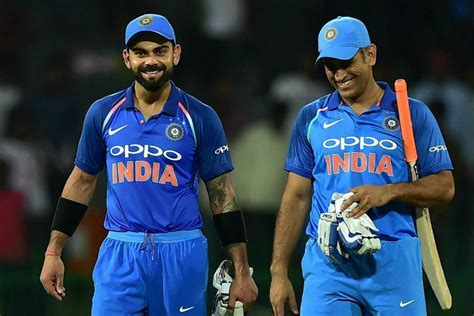
This is where the metaphor can spill over into the wider culture. Over the last decade, India has had two exceptional cricket captains, MS Dhoni and Virat Kohli. Dhoni has continued to play under Kohli’s leadership, creating this ‘mesmerizing jugalbandi’, as Smit Shah writes in a little piece.
There is that word again!
nice chatting
Paul
About Me

the art of unpacking
After a childhood in India, a theological training in the USA and a pastoral ministry in Southland (New Zealand), I spent twenty years in theological education in New Zealand — first at Laidlaw College and then at Carey Baptist College, where I served as principal. In 2009 I began working with Langham Partnership and since 2013 I have been the Programme Director (Langham Preaching). Through it all I've cherished the experience of the 'gracious hand of God upon me' and I've relished the opportunity to 'unpack', or exegete, all that I encounter in my walk through life with Jesus.
6 Comments
Leave a Reply Cancel Reply
Recent Posts

Football helps me train preachers. See, when you speak to me about football—or, ‘footie’—I need to know where your feet are before I can understand what you mean. Are your feet in Ireland, or Brazil, or the USA, or NZ—or in crazy Australia? It must be the most fanatical sporting nation in the world. Within…
Having been born in 1959, I don’t remember much about the 1960s. But I have heard a lot. Hippies. Drugs. Rock ‘n Roll. Assassinations. Moon-walking. A quick trip across to ChatGPT informs me immediately that it was ‘a transformative decade across the world’—marked by the civil rights and feminist movements, Cold War tensions, consumerism and…


That's amazing! I really liked it, and have sent your post to a friend in the US who sings jazz. It reminds me a bit of her scat singing, but with such cool energy coming from the two people riffing off and challenging each other 🙂
Glad you enjoyed it, Heather. I don't know a lot about jazz, but the comparisons with it came to my mind as well. Being so skillful that you can improvise freely. There is even a book on how preaching should be like jazz, maybe even jugalbandi :).
This post turned out to be really helpful for a preaching series I've just begun on Christ in our carols. I had hoped that alongside the classical carol I would preach on each Sunday, that we'd also be able to hear an indigenous carol from various countries of the world that our congregation members are from. However, I've discovered that Anglo-European carols have pretty much colonised Christmas singing all around the world! First up we looked at Isaac Watts' Joy to the world, that imitates Psalm 98. In order to introduce some cultural diversity I also played the jugalbandi clip as an expression of musical joy, something like what Psalm 98 and Joy to the world express. But also as an example of musical imitation, resembling musically what Isaac Watt's does lyrically with Joy to the world in imitation of Psalm 98. Which also points to how we can respond to the Lord in Joy to the world (and Psalm 98)- by imitating Christ our King! 🙂
Glad it was helpful for you.
In my travels I am disappointed by the general trend to be dependent on Christian hymnody, be it more classical or more contemporary. Indigenous worship is rare, but when it is present there is nothing quite like it, as people sing their own songs in their own heart language. It takes off. Sometimes I hear people say that in settings of great cultural diversity, opting for English-medium songs avoids having to choose between groups, favouring some and overlooking others. I understand this, but am not often convinced. And yes, I would use the 'colonizing' word as well, even though the freedom to make a choice is on offer. I can feel similar thoughts when I go home and see the influence of African-American cultures on Pacific & Maori cultures…
Dear Dr.Paul Anna,
I like your writing on jugalbandi,
I enjoyed your art of Homiletics,
Unpaking the lessons from the Musical Concerts & Cricket Field,
Brought Very clearer Observations, rightly Interpreted & Digged out profound applications of Leadership, Following, Commitment, Unity etc in a simpler way.
I enjoyed jugalbandi but I thank you for your unpaking the lessons to learn.
Wow!🤩
Thanks, Amos
God bless you
Paul